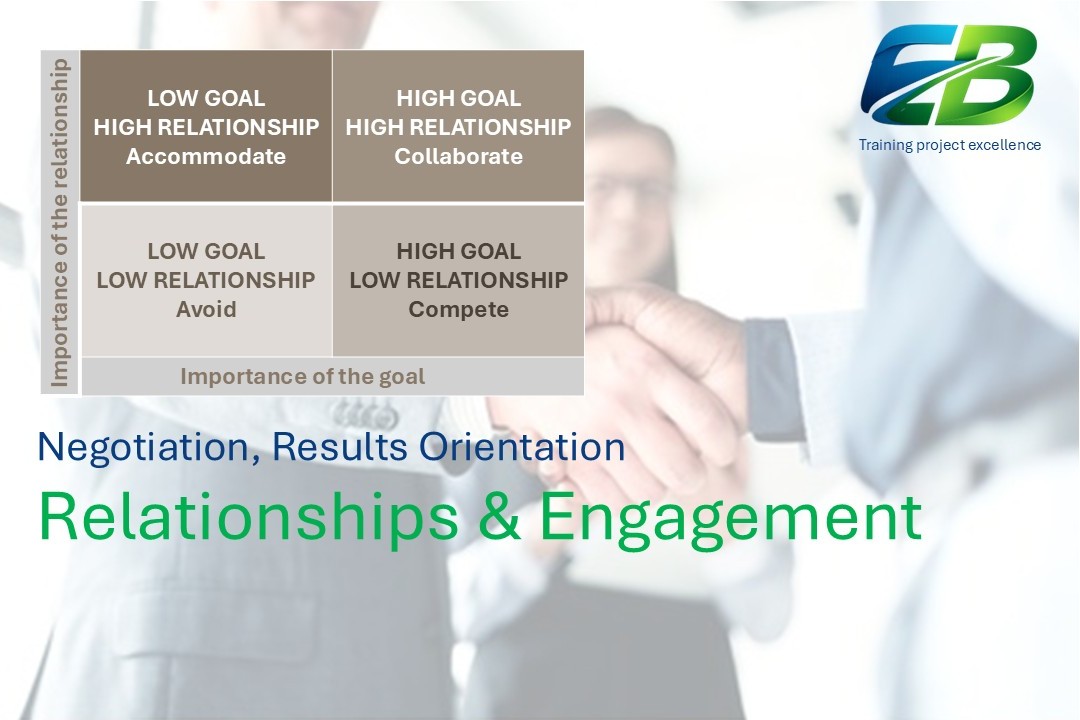
In any negotiation we are often pulled in two directions:
– The importance of the relationship – how much we value maintaining trust, respect, and collaboration with the other party.
– The importance of the goal – how much we value securing the specific outcome or objective we are negotiating for.
This model is deceptively simple, yet powerful. It reminds us that negotiation is rarely about a single issue; it is about how we manage the dynamic between what we want to achieve and how we want to maintain connections.
When we overlay this onto the IPMA ICB4, we can see a direct link with two cornerstone behavioural competences:
ℹ️ Relationships & Engagement
This competence is about building, maintaining, and leveraging trust-based relationships with stakeholders. It demands emotional intelligence, empathy, and the ability to engage others in ways that foster commitment.
In negotiation terms, this maps directly to the “importance of the relationship” axis. If the relationship is critical – for example, with a strategic partner or long-term client – we may adopt a more collaborative, win-win approach. The aim is not just to agree terms, but to strengthen the foundation for future cooperation.
ℹ️ Results Orientation
On the other side, we have the drive to deliver outcomes – meeting scope, quality, time, and cost objectives. Results orientation reflects discipline, focus, and resilience in achieving tangible goals.
This aligns with the “importance of the goal” axis. When results are paramount – perhaps in regulatory negotiations, contractual delivery, or time-critical project decisions – the negotiator must assertively pursue objectives, ensuring outcomes are not compromised.
The Balancing Act
The skill for a project professional lies not in over-emphasising one axis, but in consciously calibrating between the two:
– High goal / low relationship – Suitable for one-off, transactional negotiations where results are non-negotiable.
– High relationship / low goal – Useful where preserving goodwill is paramount, such as resolving a conflict with a long-term client.
– High on both – The ideal but challenging quadrant, where we negotiate with creativity to “expand the pie,” delivering results and strengthening trust.
IPMA’s competence framework reminds us that excellence is not just about what we deliver (results), but how we deliver it (relationships). Effective negotiators understand this duality and flex their style to fit the context.
Projects are, by nature, temporary endeavours – but their impacts and relationships are long-lasting. A negotiation that secures results but damages relationships may undermine future collaboration. Conversely, prioritising relationships without achieving outcomes may compromise delivery confidence.
Aligning Results Orientation with Relationships & Engagement helps to create sustainable success.
#ProjectManagement #NegotiationSkills #IPMA #StakeholderEngagement #ResultsOrientation #Collaboration